Day of Days - Normandy
The ‘Band of Brothers’ Story
Where it actually happened.
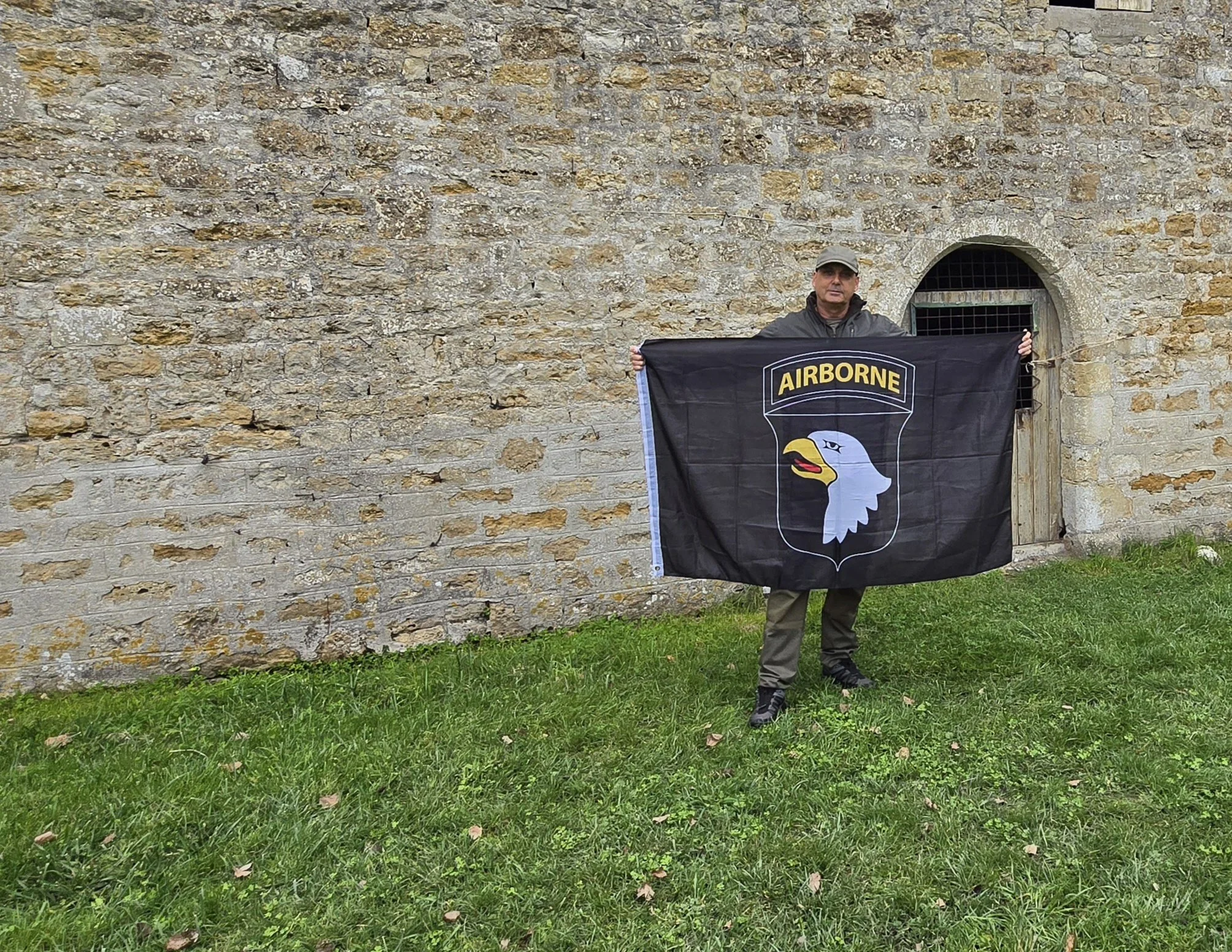
The exploits of Easy Company, 2nd Battalion 506th P.I.R. are well known thanks to the book by the historian Stephen Ambrose and the HBO mini series. In the following pictures which i took in October 2025 I wish to show you where in reality some of their famous actions in Normandy took place. However, it is important to remember that whilst the story of Easy Company is so well known, thousands of other allied airborne soldiers in Normandy were carrying out other tasks equally as difficult with the same resolve and determination.
Easy Company’s lead plane flown by Lt. Harold Cappelluto was hit by Anti-aircraft fire and whilst his aircraft was burning Lt. Cappelluto tried to make a forced landing. The C-47 transport crashed into a field at Beuzeville au Plein. Everyone on board was killed including Easy Company’s Commanding Officer Lt. Thomas Meehan. The aircraft actually crashed in the field behind the hedgerow in the photograph.
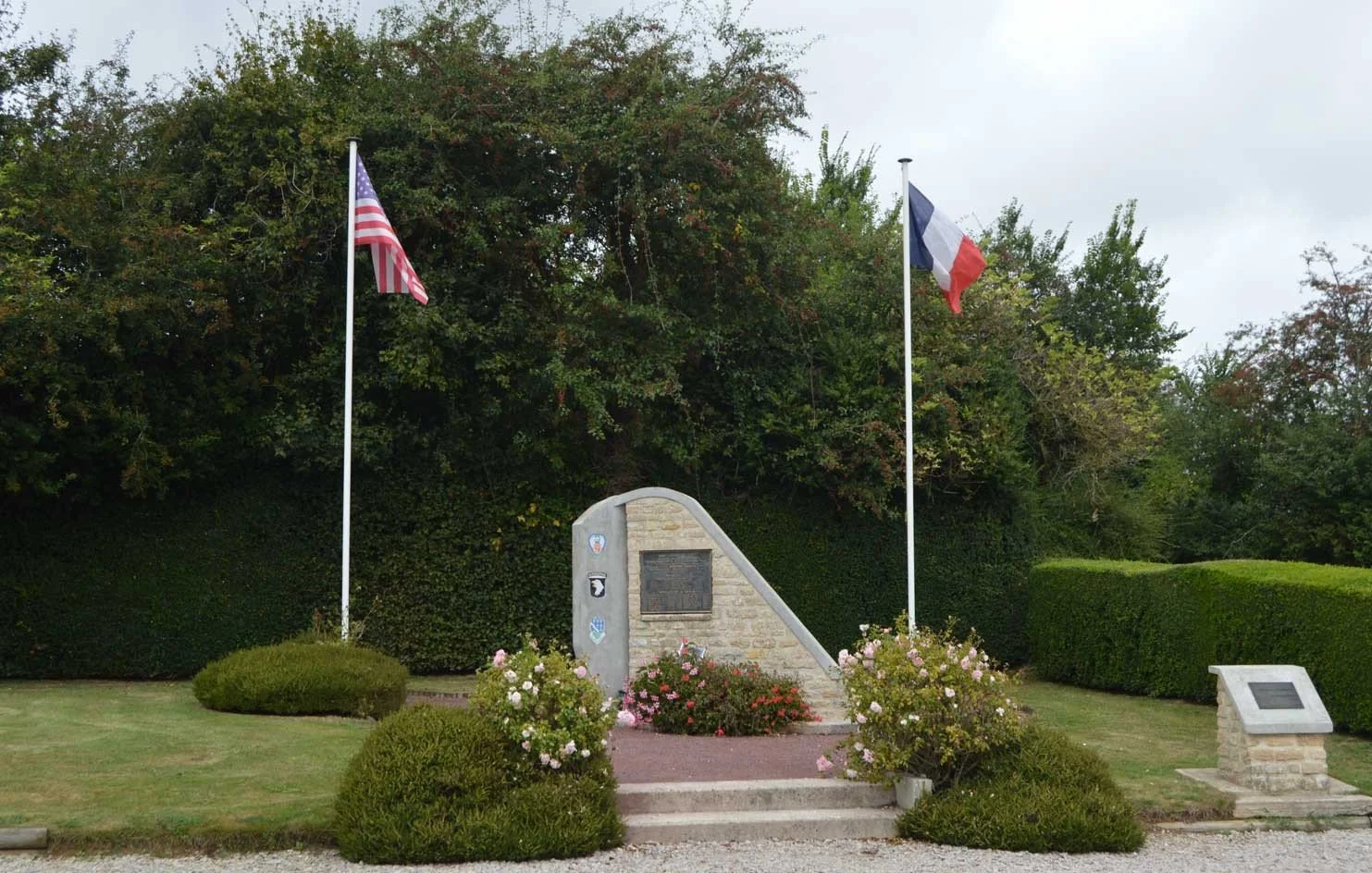
Although Major Winters himself could not be 100% sure where he landed, he recalled he was to the West of St Mere Eglise, in a field near to a junction of two roads. The general consensus of opinion is that it was here on the D15 just by the town limit. I have recorded the area on the video on this page.
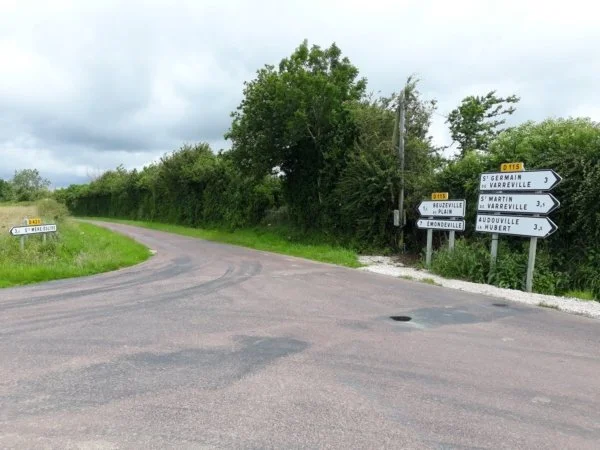
Easy Company’s first action was the ambush of a small German horse drawn convoy in a dark tunnel., Sgt Bill Guarnere defied Lt Winters and opened fire on the Germans before Winter’s command. The Ambush did not take place in a dark tunnel, it happened here at the junction of D423 and D115. The Germans approached up the road towards the photograph. The waiting Paratroopers were concealed in the hedgerows.
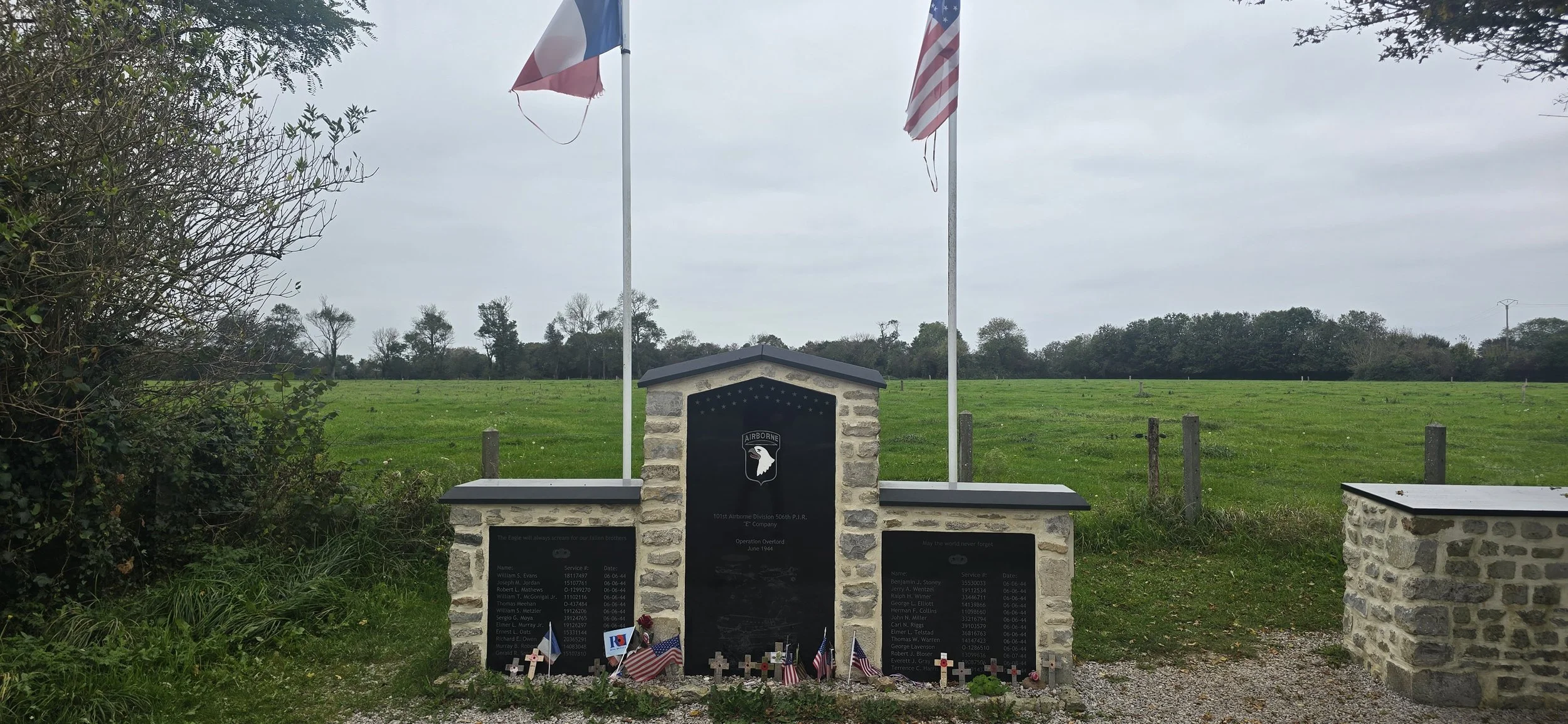
Easy Company’s best known action in Normandy. Attacking and neutralising four German Howitzers which were bombarding UTAH Beach. The German guns were placed behind and to the left of the hedgerow in the distance.
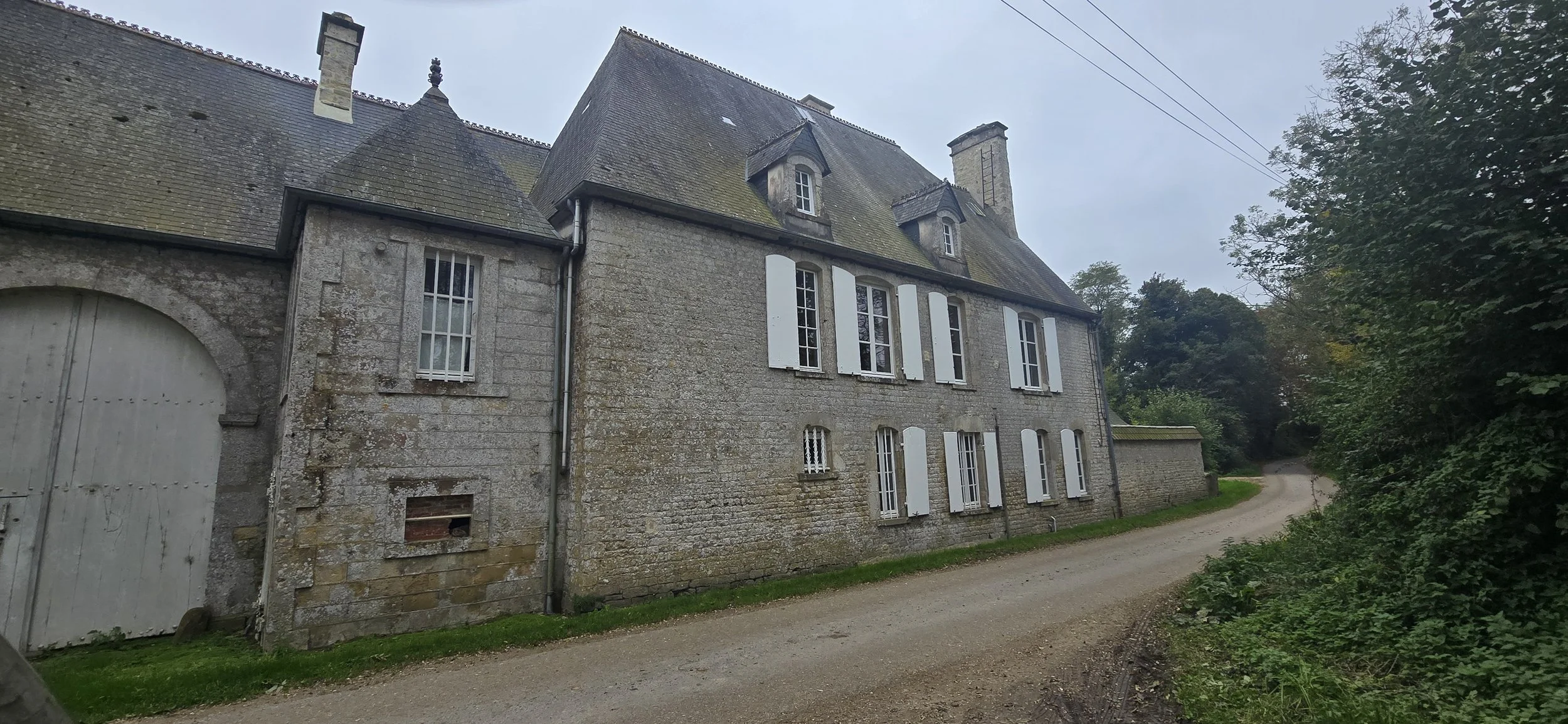
Braecort Manor -The headgrows in front had Guns which Easy company neutralised on D Day.
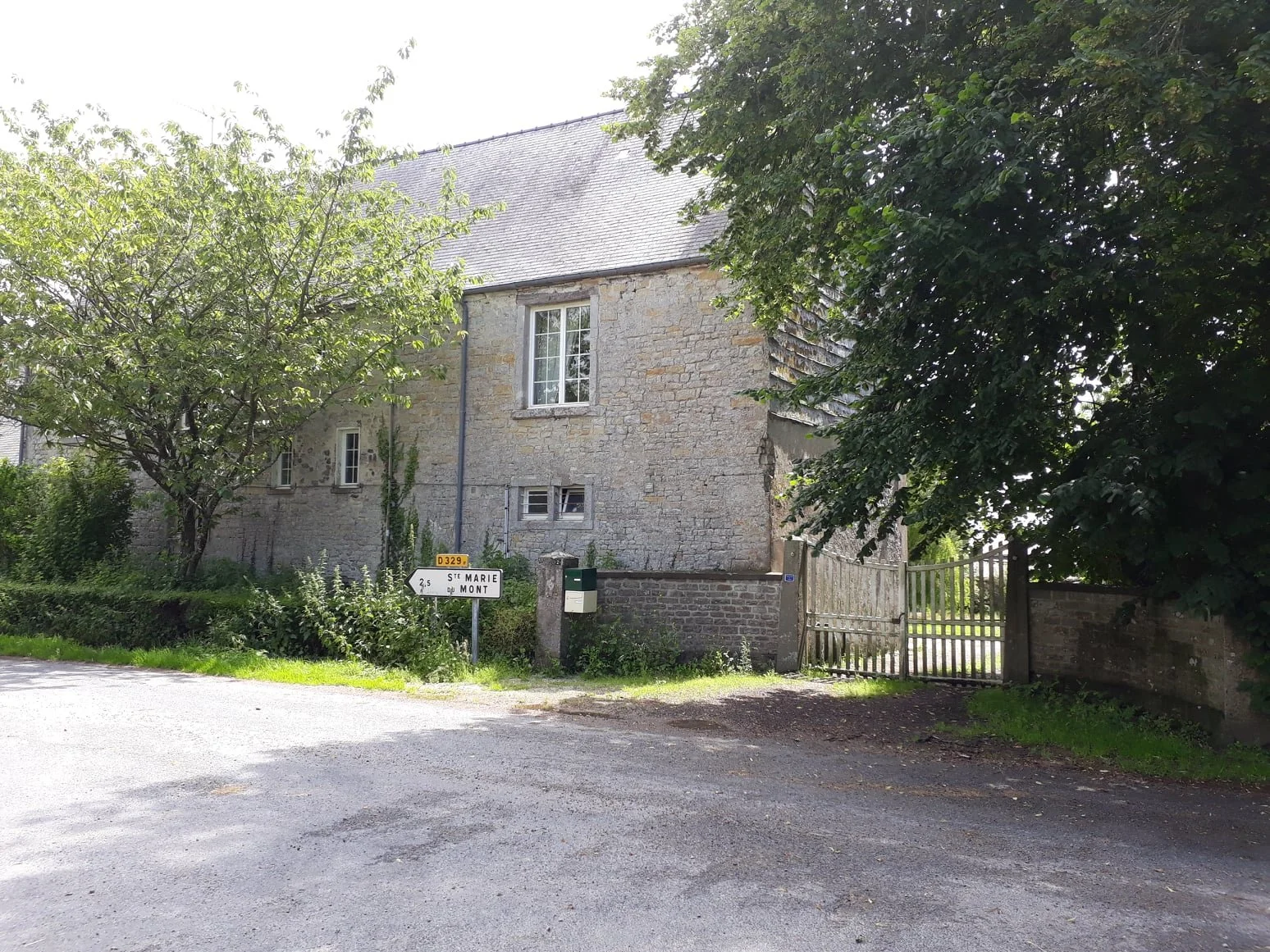
Colonel Sink’s Headquarters at Culoville.
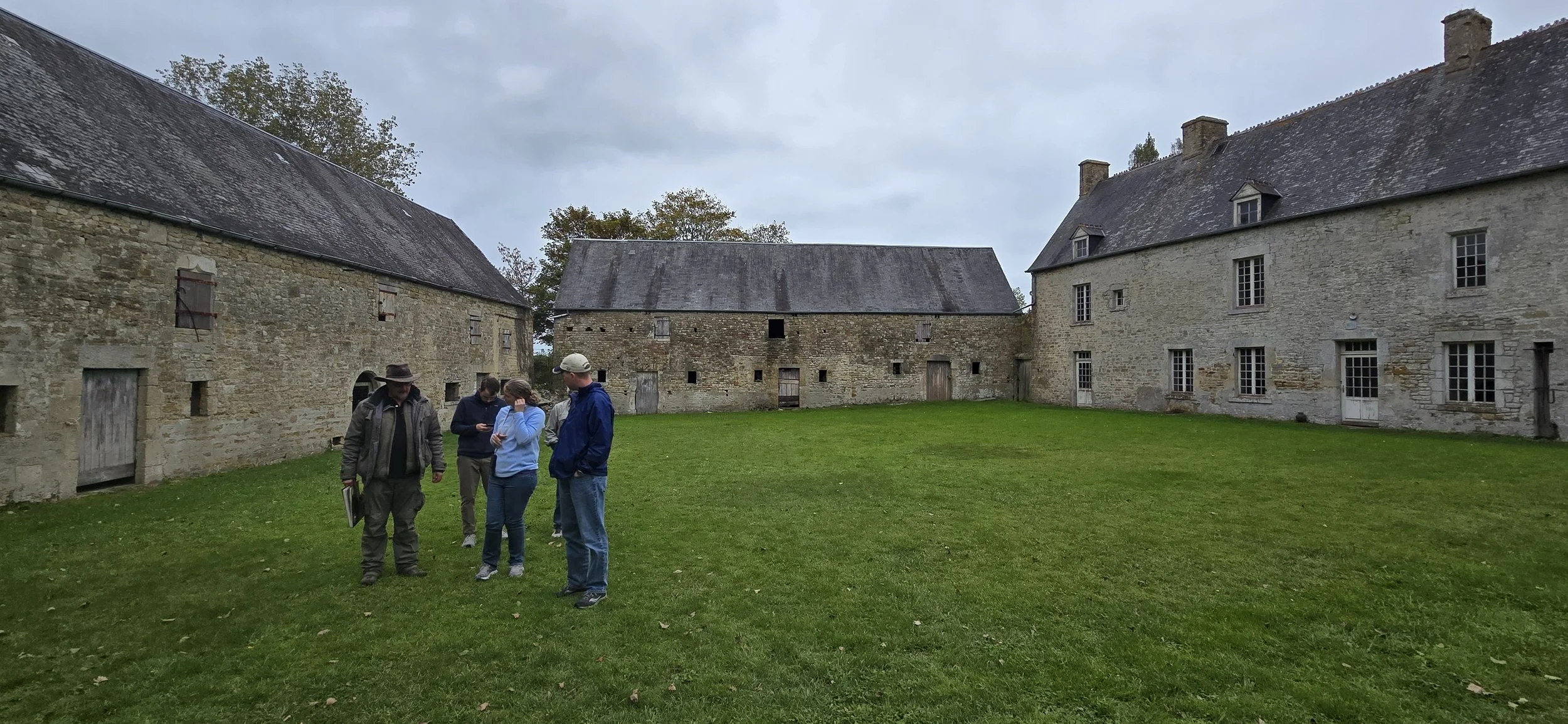
Marmion's Farm, located at the crossroads to the southeast of Ravenoville, holds significant historical importance as a rendezvous point for paratroopers who were mis-dropped during World War II. The farm is known for being the site where famous photographs of the 101st airborne division were taken, including iconic images captured by Forrest Guth and James Flanagan.
During the night and the morning of June 6th, the junior commander of the 3rd Battalion of the 502nd Parachute Infantry Regiment (PIR), Major John P. Stopka, gathers all the isolated elements near Ravenoville. These paratroopers guided by Stopka attack a farm (formerly of the Marmion family) south of Ravenoville, which was turned into a fulcrum by the Germans to control the crossroads between departmental roads 14 and 15. They kill six soldiers and make 24 prisoners and then moved into the buildings. Lost or isolated paratroopers reinforce the position: these men belong mainly to the 1st battalion of the 506th PIR (1/506th) and the 2nd battalion of the 502nd PIR (2/502nd), but Stopka also gathers men from the 3/502nd, 2/506th, battery A of the 377th Parachute Field Artillery Battalion and the 508th PIR (82nd Airborne Division). They defended themselves against several German attacks before retreating the next day in direction of Sainte-Marie-du-Mont.

At the end of June 1944 "Continental Central Enclosure No19" was created within the communes of Fourcarville and Ravenoville under the command of Lieutenant Colonel Kennedy. The camp was originally designed to house 20,000 but was enlarged to house 40,000 including 218 Generals and 6 Admirals. The camp was built by American troops labouring alongside 400 German prisoners. The camp amounted to a full blown town, complete with electric lighting, roads, pavements, several kilometres of narrow-gauge railway with petrol and diesel driven locomotives and 75 wagons. There was also a 1000 bed hospital, a church, sanitary facilities, water from a diverted stream and 5 ovens capable of producing 20,000kg of bread. For entertainment the camp also contained a cinema, a 400 seat theatre with ballroom for American soldiers and another 850 seat theatre for German soldiers, a symphony orchestra and a stadium. Due to the amazing facilities at the camp no German prisoners of war attempted to escape. The camp was dismantled at the end of 1947, the prisoners having been transferred to the United States, Canada and the United Kingdom.
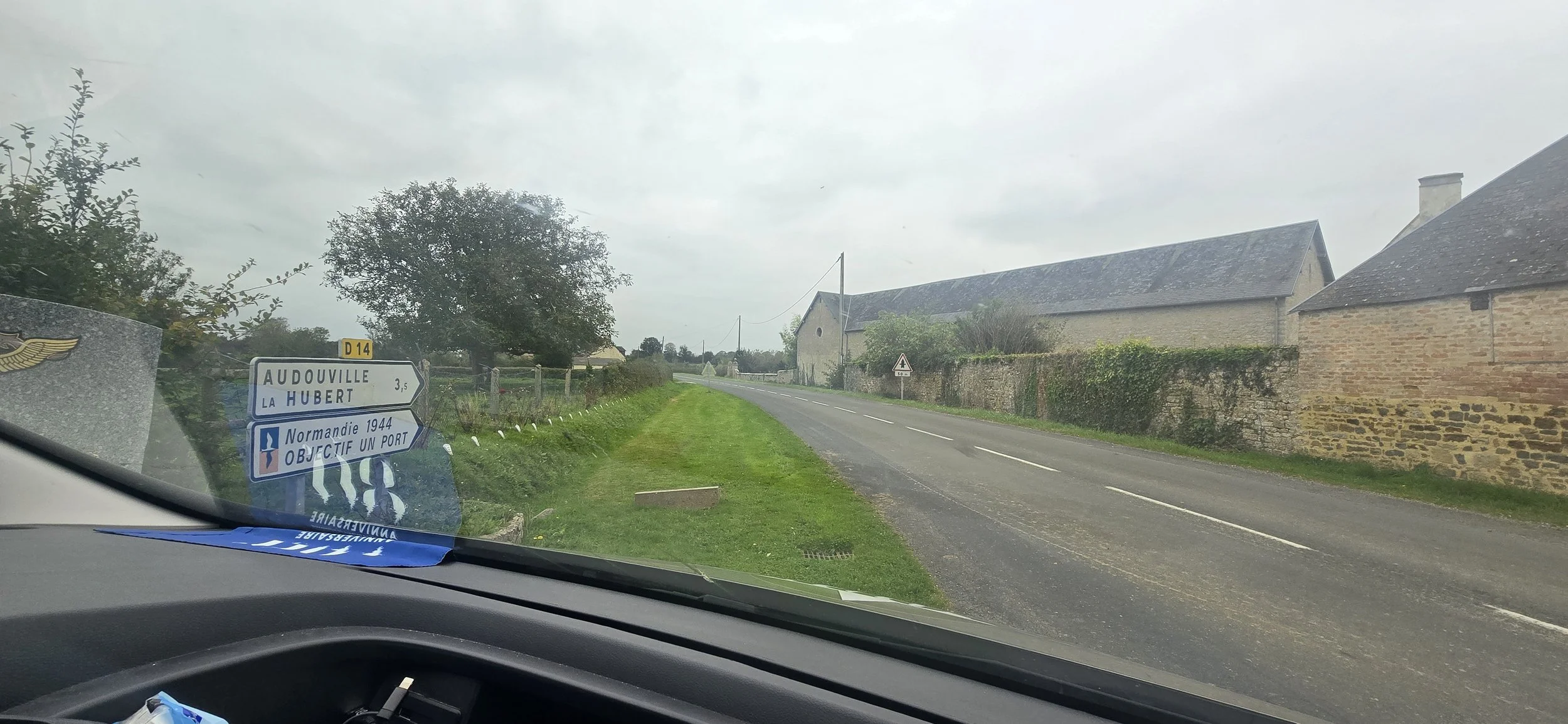
In the early hours of June 6, 1944, parachutes on Normandy began. The first battalion of the 502nd Parachute Infantry Regiment (PIR) is not being dropped at the intended location, but US paratroopers are moving towards their targets without delay. Lieutenant-Colonel Cassidy was himself parachuted near Saint-Germain-de-Varreville. Several airborne units are mixed up due to these dropping errors: about 180 paratroopers belonging to the 2nd battalion of the 506th PIR gather at night near Foucarville. They were joined by some twenty paras of the 508th PIR (82nd Airborne Division) and, at 3:30, by Lieutenant-Colonel Robert L. Strayer commanding the 2nd battalion of the 506th PIR accompanied by fifty other paras. These elements unite their strength and head south at 4:30. But immediately south of Foucarville, on approaching Saint-Germain-de-Varreville, they were taken to task and fixed there until noon by the adversary.In the afternoon, company C of the 502nd PIR crosses Saint-Germain-de-Varreville in order to seize Beuzeville-au-Plain. In the early evening, the 1st battalion of the 22nd Infantry Regiment arrived in reinforcement to the benefit of the 502nd PIR, harshly tried by the fighting of the day, and settled for the night north of the village, facing Foucarville. On the following day, June 7, 1944, the 1st Battalion of the 22nd Infantry Regiment launched its offensive towards the north and continued its progression over more than two kilometers.
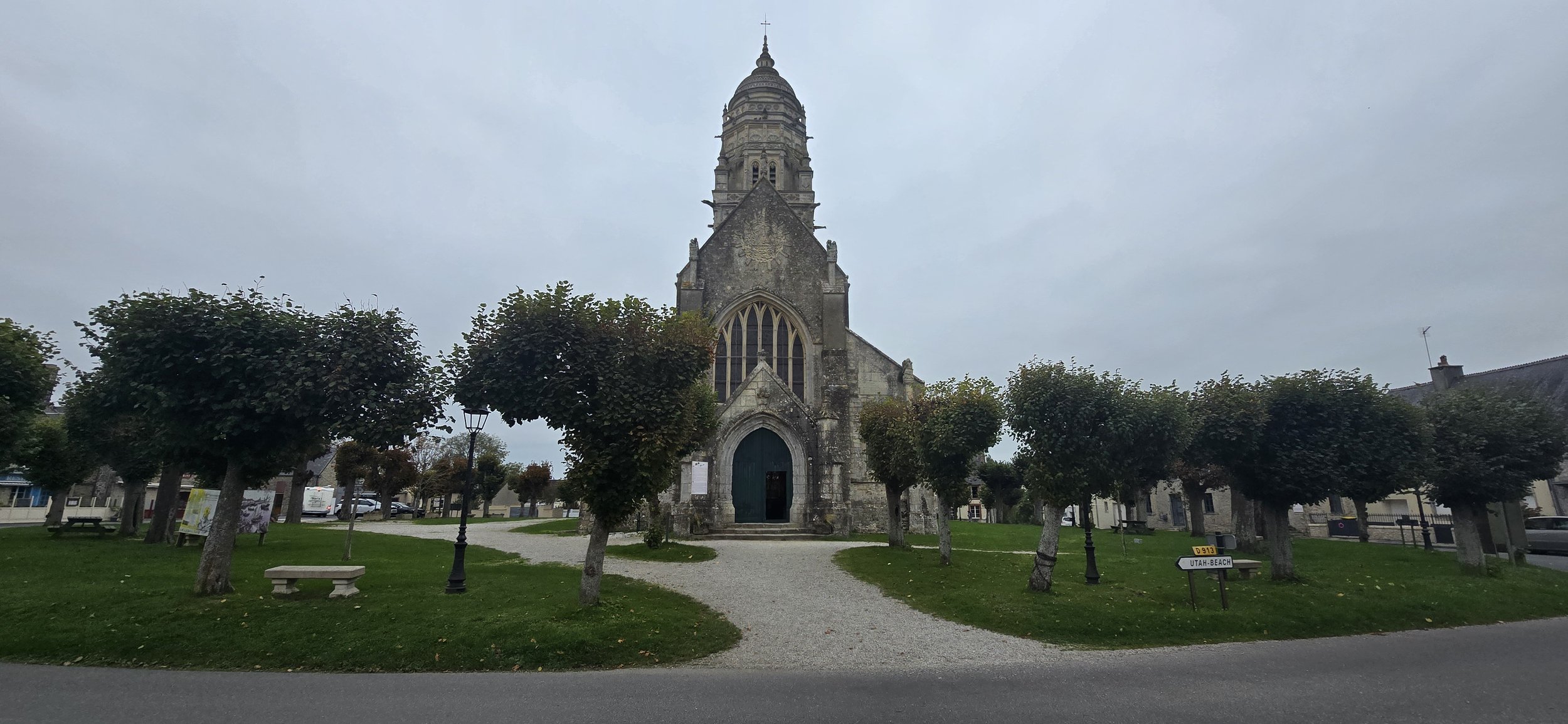
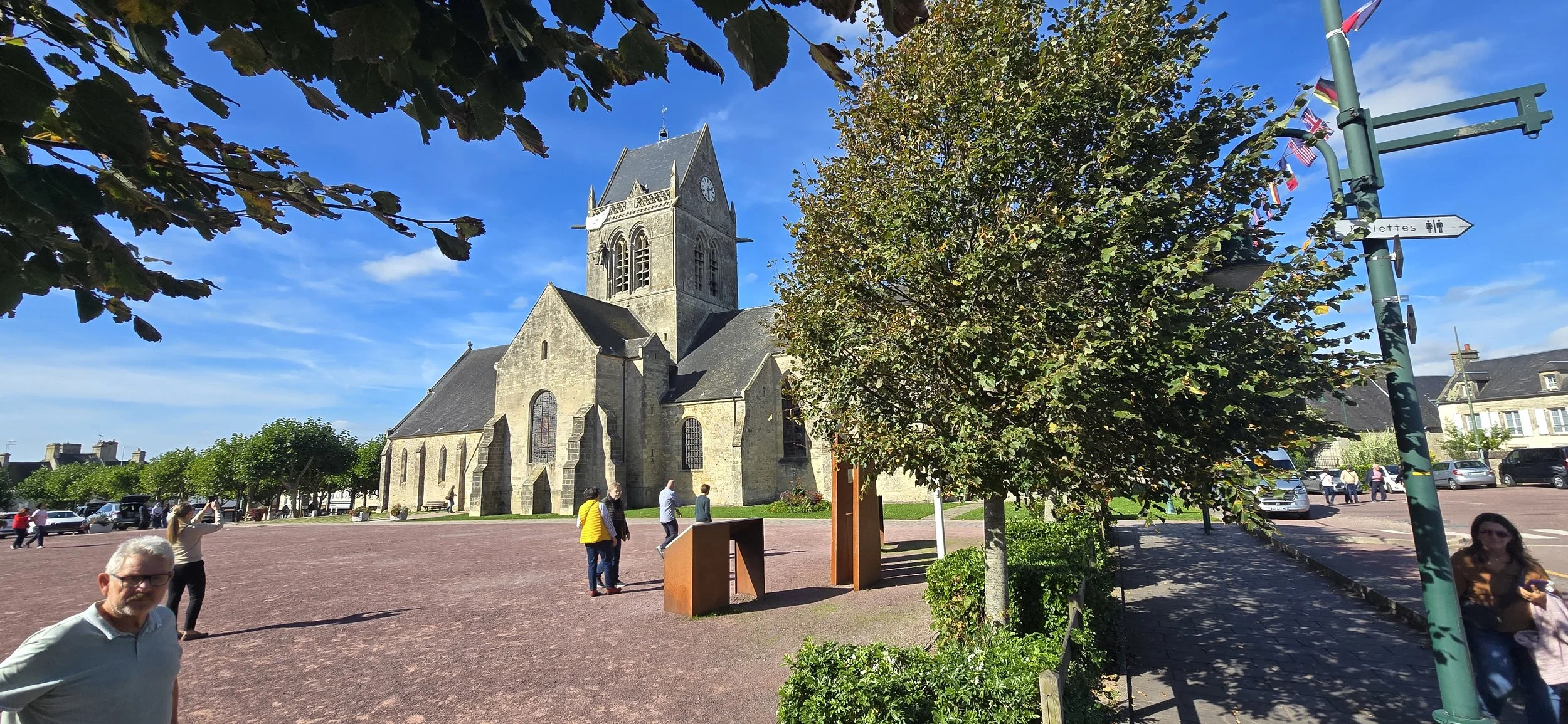
Sainte Marie du Mont This small town behind Utah Beach was an important strategic point for the 101st Airborne to capture. The Germans occupying the town had a perfect view from the church steeple of the troops landing on Utah Beach. But, confronted with widely scattered landing of the Paratroopers in the hours preceding dawn, the Americans only succeeded in capturing the town during the afternoon of June 6th. Today you can see : – The French WWI monument in the village depicted in a famous photo of some of the members of Easy Company, 506th Parachute Infantry Regiment, made famous in the HBO series ‘Band of Brothers’- The water pump behind which a paratrooper took up position to defend against the Germans forces coming to reinforce the village. – The village square around the church which remains almost unchanged since 1944.
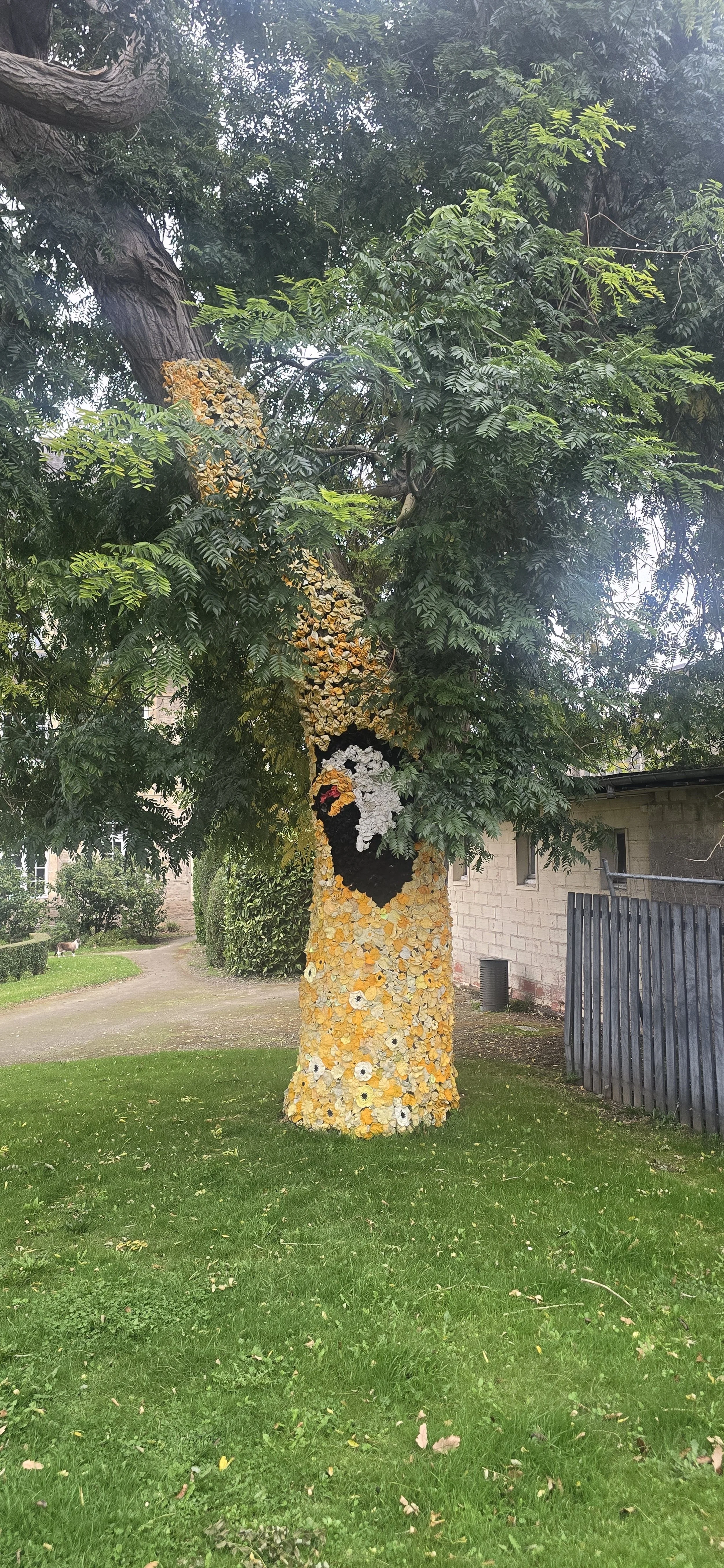
Next to the Memorial to the battle of Carentan is a tree decorated with hundreds of crocheted Rosset's in the picture of the Screaming Eagle, the fort thing i saw after getting off the train!
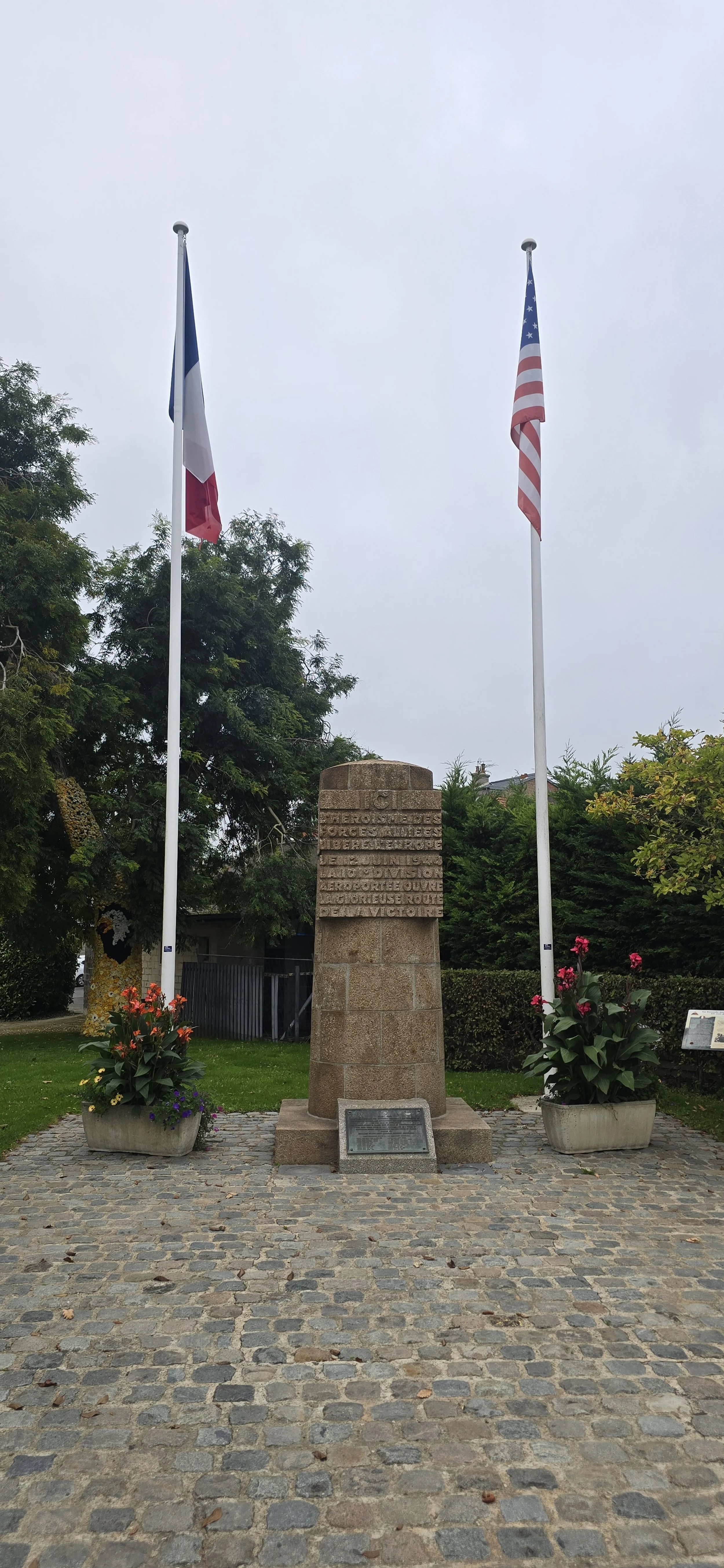
This major town of the Cherbourg peninsula, a key objective of the Normandy invasion, was liberated by the 101st Airborne Division on the 12th of June, 1944. This memorial plaque is placed her in honor of those “Screaming Eagles” who gave their lives in this campaign and as a token of continuing esteem and friendship for the people of France. Placed by comrades of the 101st Airborne Division Association.
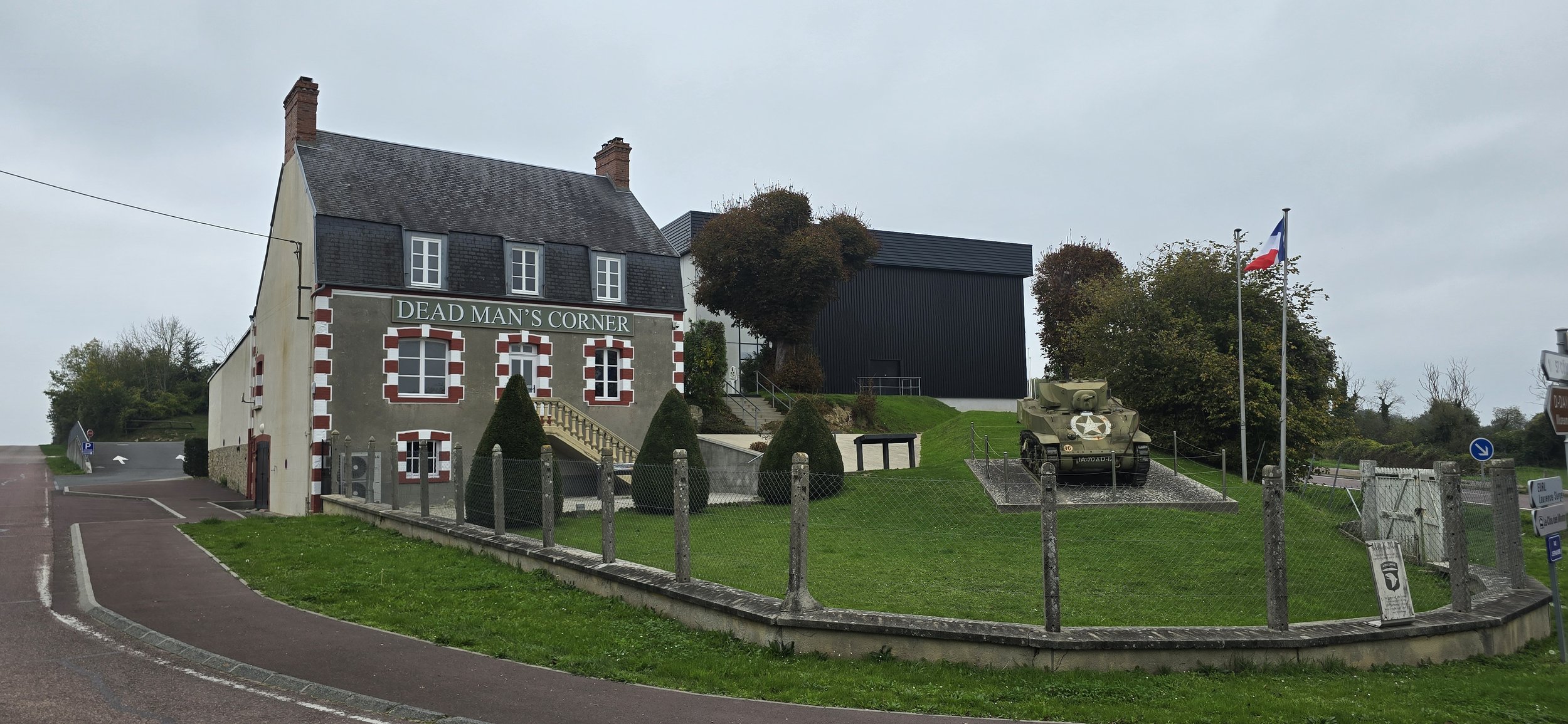
Dead Mans corner, Museum and Experience sits at the tip of Purple Heart lane. From June 9 to 11, 1944, this section of the former N13 was the scene of bloody and costly fighting for the American 101st Airborne Division during the liberation of Carentan. The third battalion of the 502nd Parachute Regiment of the 101st Airborne Division lost several hundred men there before capturing the Ingouf farm thanks to a daring bayonet charge. The battle fought by the 3rd Battalion of the 502nd Parachute Infantry Regiment, which was quickly reinforced by Lieutenant Colonel Patrick Cassidy's 16th Battalion, weakened the German paratroopers who evacuated Carentan on the night of June 11-12. Survivors quickly dubbed the area Purple Heart Lane, a reference to the purple, heart-shaped medal awarded by the US Army to its dead and wounded.
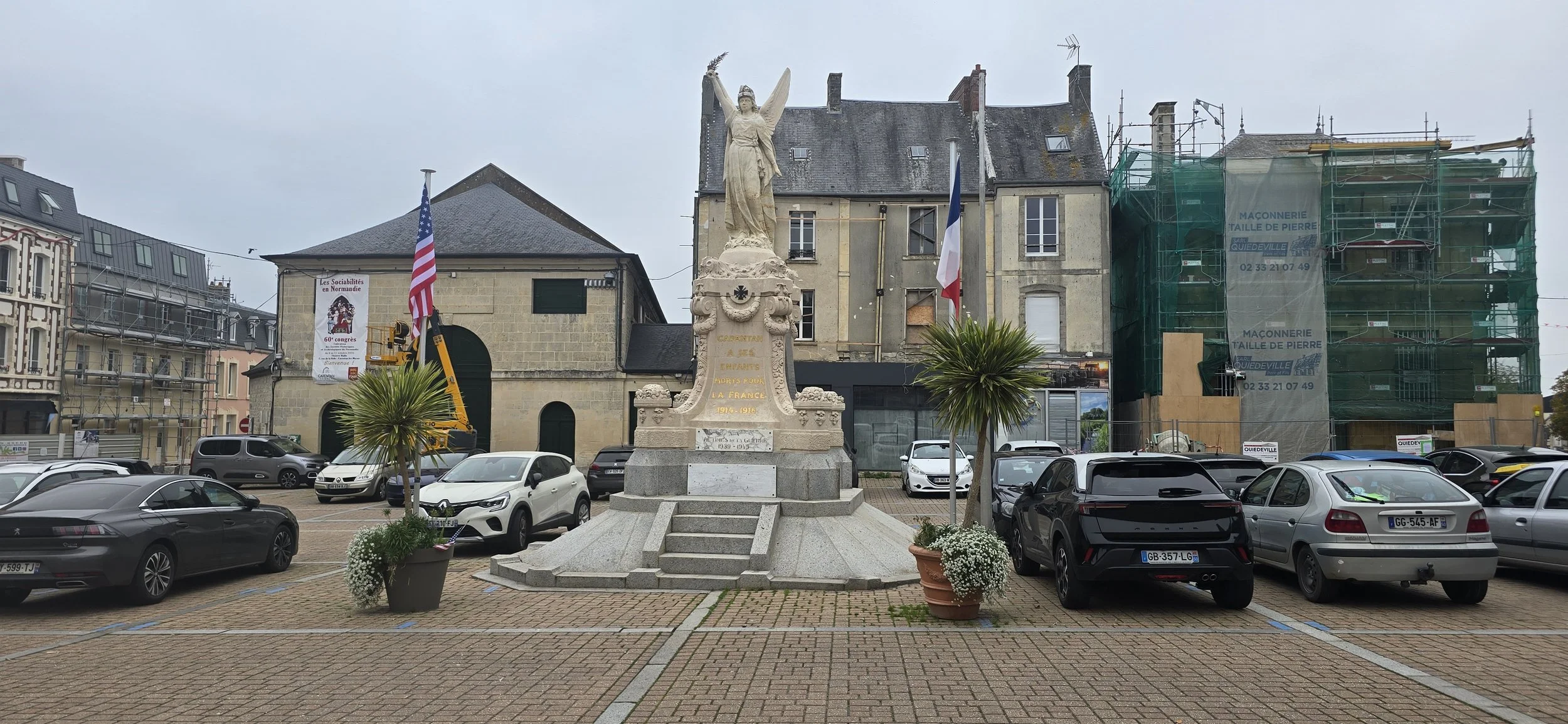
World War one Memorial was the centre point for many Parades and Marches after the Battle. Many photos were taken of the 101st here.
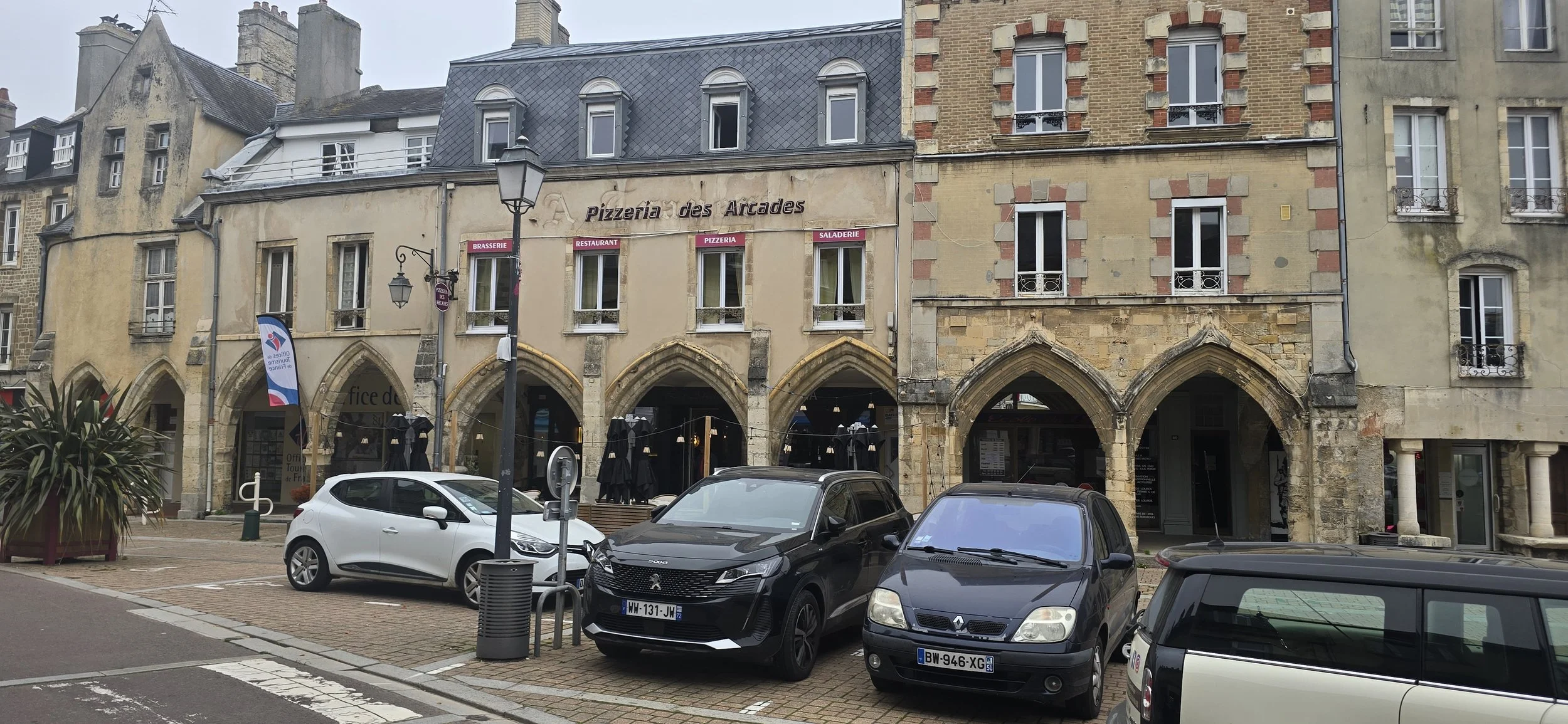
The Carentan Arches as seen on Band of Brothers. The centre of heavy fighting.
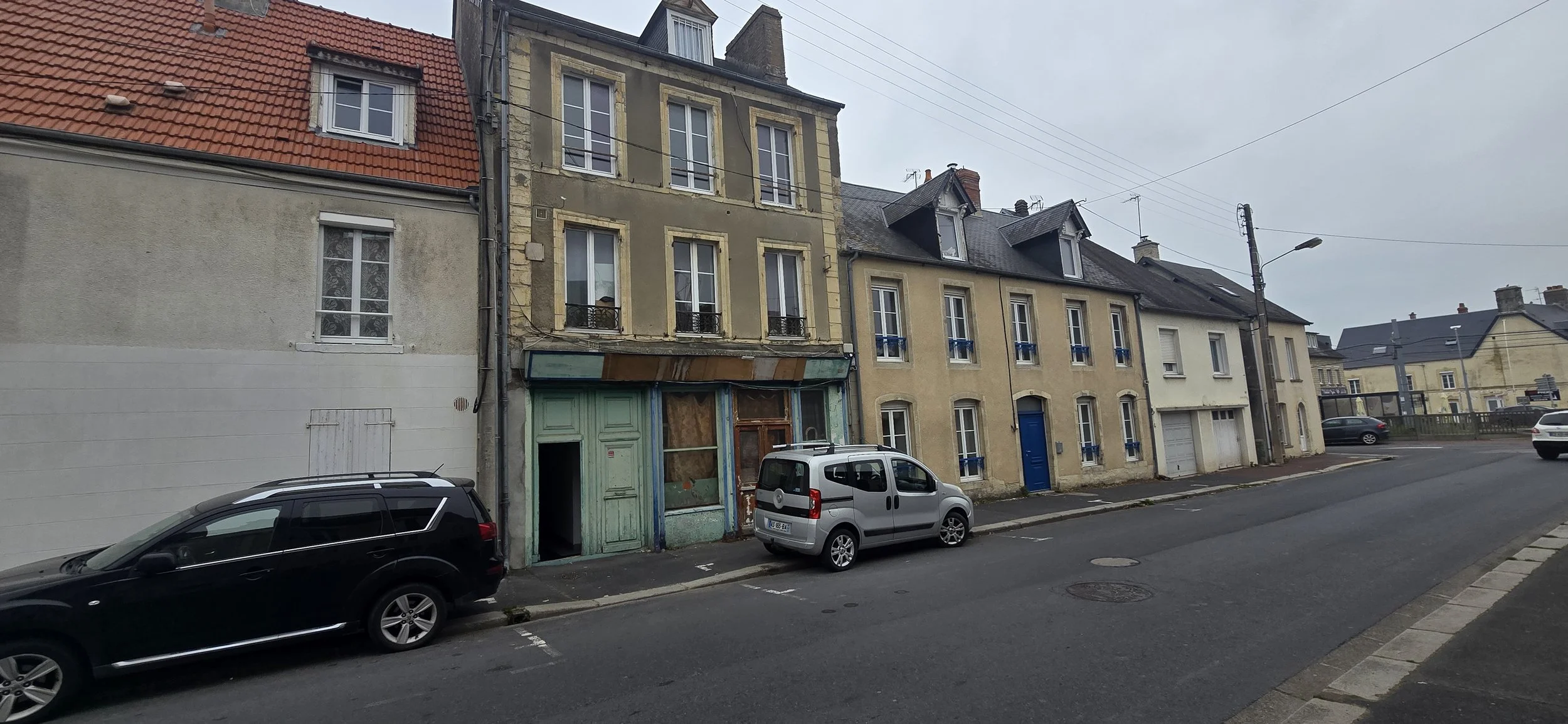
This house was used as an Aid station and can been seen on Band of Brothers.
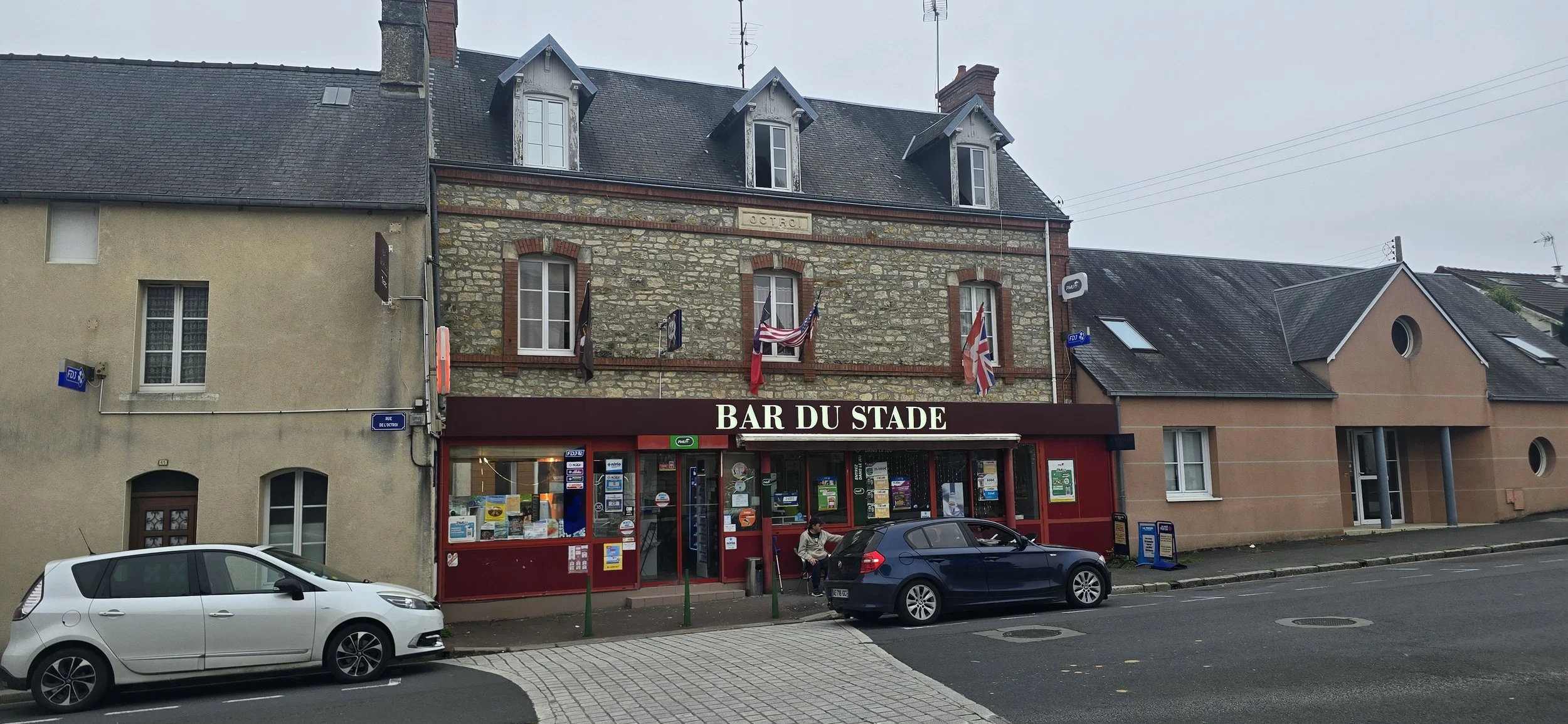
“Move out!” shouted Lieutenant Richard “Dick” Winters to the men of Easy Company. It was 6 o’clock on the morning of June 12, 1944, and Easy Company’s paratroopers braced themselves to attack the southern section of Carentan. Lieutenant Harry Welsh dashed forward, leading his 1st Platoon over a small rise and down the slope into the town. His men followed until someone yelled, “Look o-o-o-u-u-u-t!” A German machine gunner in a second-story window perpendicular to the road opened up, firing rounds straight down the street. Bullets popped by the men’s ears and struck the ground, spraying them with dirt and rocks. Six of the charging paratroopers stayed with Welsh while the rest dove for ditches on either side of the road, hiding from the fire. “Keep moving! Keep moving!” Winters shouted at the men. When they wouldn’t budge he jumped into middle of the road and furiously shouted, “Move out! Move out!” and started cursing. No one moved, some even burrowed into the ground with their hands. The battalion officers, seeing the critical breakdown, shouted at Winters. “Get them moving, Winters! Get them moving!” Tossing off his gear, Winters dashed to the ditches on the left side of road and, while kicking some of the cowering men, shouted, “Get going!” and spouted more expletives. Then he ran to the right side of the road and continued cajoling the men to join the attack. Enraged and unable to reinforce Welsh’s tiny force, Winters crossed back to the left side, enemy bullets snapping by or ricocheting off the road, and tried again. Up ahead, Welsh and a handful of his men dueled with the machine gunner, while Welsh tried to figure out what happened to the rest of his platoon. It was a desperate moment for Winters. His company was divided and frozen. He had led some of these men on a successful attack just six days earlier and nothing like this had happened. If he could not get the rest of his company to join the isolated spearhead, those men would be killed and the attack delayed. Worse, the men bunched up along the road made for a perfect stationary target. If he could not get them moving, the Germans would eventually start picking them off. “You’re gonna die here! Move!” he shouted at them. Carentan stood like an island of resistance between the two slowly expanding American D-Day beachheads at Omaha and Utah Beaches in France’s Normandy region. The German grip on the town prevented the two American forces from uniting. With their two main forces divided, the Americans were susceptible to enemy flank attacks while they rapidly built up strength on the shore. The Americans had to take Carentan, not only to unite their forces, but also to access the town’s important crossroads linking the American, British, and Canadian beaches with the Cherbourg Peninsula to the west. Once the Americans held Cherbourg’s harbor, they could start bringing in more supplies for their advancing armies.
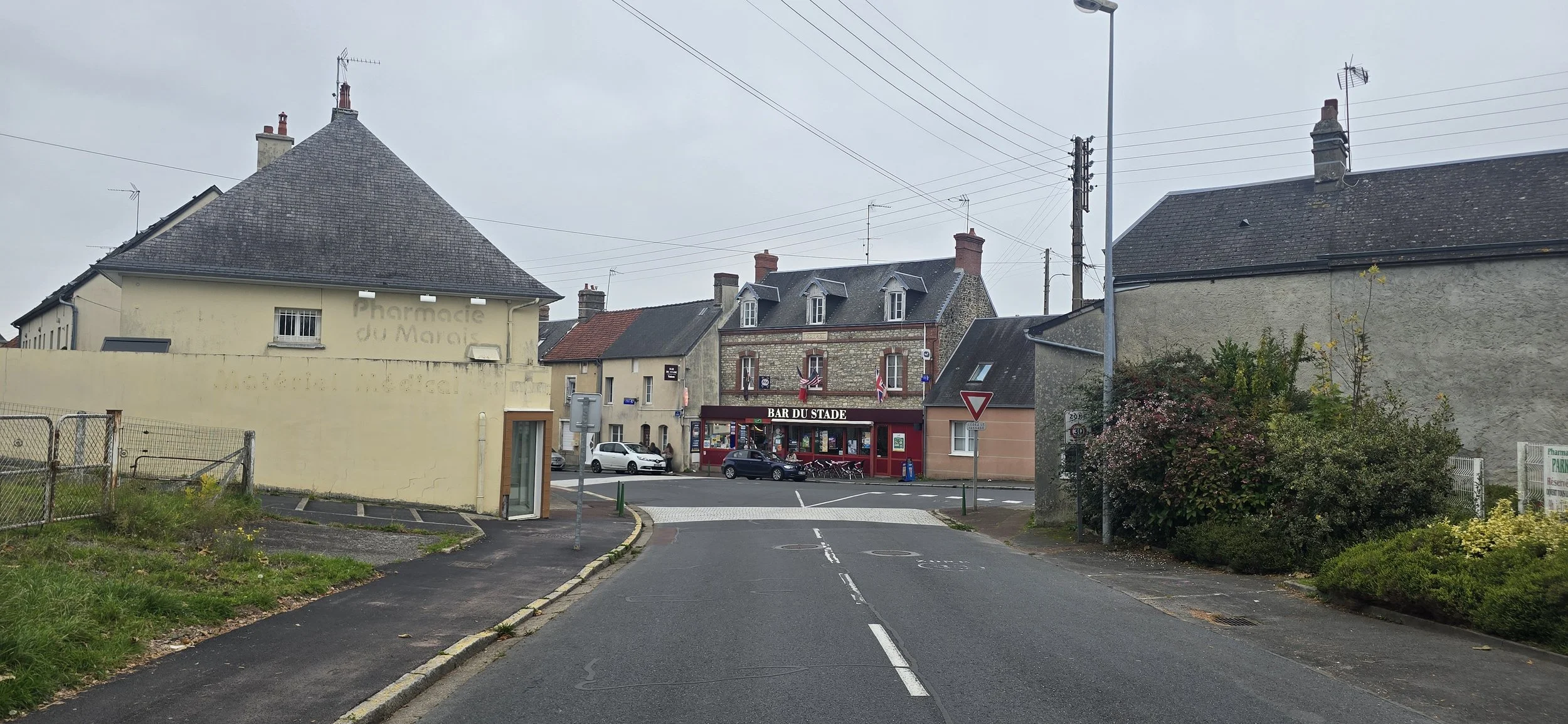
Easy Company’s route into Carentan is shown in a recent photograph. The Germans set up a machine-gun nest in the second-story window of the center building with the red awning. Lieutenant Richard Winters had to furiously cajole his men forward down the road to the left. Easy Company men eventually knocked out the nest by firing rifle grenades at it from across the street.
My 101st Airborne Normandy Adventure
My Videos of my two Days walking in the footsteps of the 101st Airborne - October 2025